Borderline Personality Disorder vs. Bipolar Disorder: What’s the Difference?

Borderline Personality Disorder (BPD) and bipolar disorder are two different mental health conditions that can sometimes appear similar. Both can involve changes in mood, impulsive behavior, and difficulties in relationships or daily functioning. Because of these similarities, it can sometimes be difficult to understand which condition may be contributing to a person's symptoms.
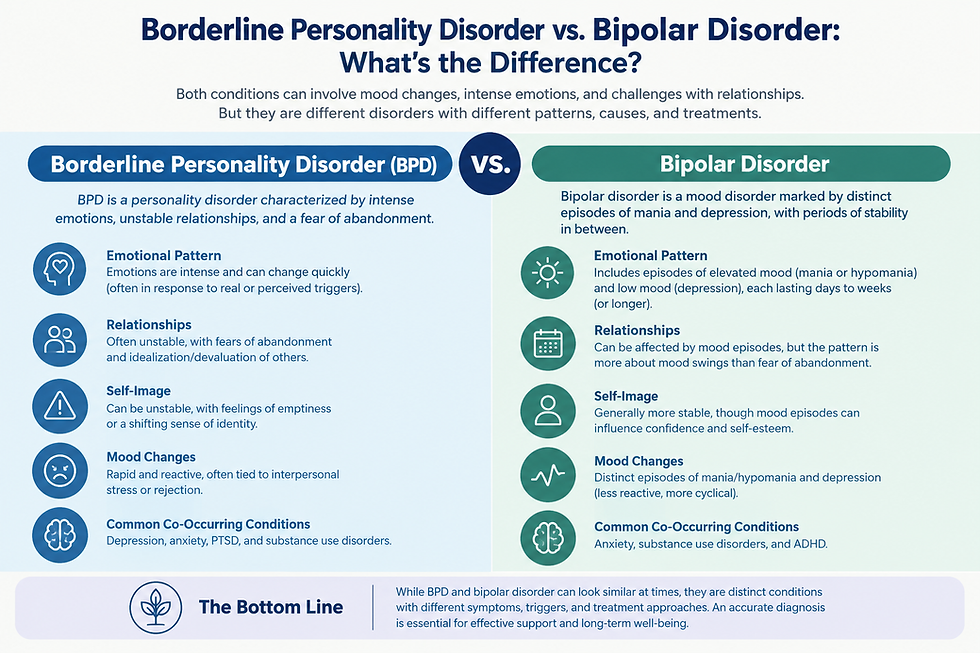
The key difference is that Borderline Personality Disorder is primarily associated with persistent difficulties involving emotional regulation, relationships, self-image, and behavior, while bipolar disorder is characterized by distinct mood episodes involving mania, hypomania, and depression.
The National Institute of Mental Health (NIMH) provides information about Borderline Personality Disorder, including symptoms, diagnosis, treatment, and related mental health conditions. National Institute of Mental Health
Understanding the differences between BPD and bipolar disorder can help individuals and families seek an appropriate professional evaluation and treatment.
What Is Borderline Personality Disorder?
Borderline Personality Disorder is a mental health condition that can significantly affect emotional regulation, relationships, self-image, and behavior.
People with BPD may experience intense emotions that change quickly. They may also have difficulty managing feelings of rejection or abandonment and may experience unstable or intense relationships.
According to NIMH's Borderline Personality Disorder resource, symptoms can include emotional instability, an unstable sense of self, intense relationships, impulsive behaviors, chronic feelings of emptiness, intense anger, and difficulties related to perceived abandonment. National Institute of Mental Health
Mood changes associated with BPD can sometimes occur within hours or a few days, particularly in response to interpersonal stressors or other events. BPD can also occur alongside other conditions, including depression, anxiety disorders, PTSD, substance use disorders, and bipolar disorder.
What Is Bipolar Disorder?
Bipolar disorder is a mental health condition characterized by episodes of significant changes in mood, energy, activity, and concentration.
A person with bipolar disorder may experience periods of:
Mania, involving an unusually elevated, expansive, or irritable mood and increased energy or activity
Hypomania, which has similar symptoms to mania but is less severe
Depression, involving persistent sadness, loss of interest, low energy, hopelessness, or other depressive symptoms
The National Institute of Mental Health's Bipolar Disorder resource provides detailed information about bipolar symptoms, diagnosis, treatment, and available support. National Institute of Mental Health
Bipolar mood episodes can last for days or weeks and may cause noticeable changes in behavior and daily functioning.
Borderline Personality Disorder vs. Bipolar Disorder
Although these conditions can share certain symptoms, there are important differences.
Feature | Borderline Personality Disorder | Bipolar Disorder |
Primary pattern | Emotional regulation, relationships, self-image, and behavior | Distinct mood episodes |
Mood changes | Often rapid and may be influenced by interpersonal events | Occur as part of manic, hypomanic, or depressive episodes |
Mania | Not a defining feature | Defining feature of Bipolar I |
Hypomania | Not a defining feature | Present in Bipolar II |
Relationships | May be significantly affected by fears of rejection or abandonment | May be affected during mood episodes |
Self-image | Can be unstable or change significantly | May change during mood episodes but is not typically the central feature |
Impulsivity | May occur as part of ongoing emotional or interpersonal difficulties | May increase during mania or hypomania |
Treatment | Psychotherapy is an important component | Medication, psychotherapy, or a combination may be used |
These are general differences and should not be used for self-diagnosis. Some individuals can experience both BPD and bipolar disorder, making a comprehensive psychiatric evaluation especially important.
How Are the Mood Swings Different?
One of the most important differences between BPD and bipolar disorder is the nature and duration of mood changes.
With BPD, emotional shifts may happen quickly and can be strongly influenced by interpersonal experiences. For example, a disagreement, perceived rejection, or fear of abandonment may trigger intense emotional distress.
With bipolar disorder, mood changes are typically part of broader episodes. During mania or hypomania, a person may experience increased energy, decreased need for sleep, racing thoughts, rapid speech, increased activity, or unusually elevated or irritable mood.
Depressive episodes may involve low mood, loss of interest, fatigue, difficulty concentrating, or feelings of hopelessness. National Institute of Mental Health
NIMH also notes that impulsive behaviors can occur in both conditions. However, BPD symptoms occur without the significantly elevated mood characteristic of manic or hypomanic episodes.
BPD vs. Bipolar: Understanding Mania
Mania is an especially important distinction between BPD and bipolar disorder.
A manic episode can involve:
Very elevated or extremely irritable mood
Increased energy or activity
Racing thoughts
Talking more quickly than usual
Decreased need for sleep
Increased confidence or feelings of importance
Increased involvement in pleasurable or risky activities
Difficulty maintaining normal work, social, or relationship responsibilities
For Bipolar I disorder, mania is a defining part of the diagnosis. Bipolar II disorder involves hypomanic episodes and major depressive episodes rather than full manic episodes. National Institute of Mental Health
BPD does not require manic or hypomanic episodes. Instead, emotional instability and ongoing difficulties involving relationships, self-image, and behavior are central features of the condition.
Can Someone Have Both BPD and Bipolar Disorder?
Yes. It is possible for someone to have both conditions.
NIMH notes that people with BPD may also experience bipolar disorder, depression, PTSD, anxiety disorders, substance use disorders, and eating disorders. When conditions occur together, symptoms can overlap and make diagnosis and treatment more complicated. National Institute of Mental Health
This is one reason it is important not to rely on a single symptom, such as mood swings or impulsivity, when trying to determine whether someone has BPD or bipolar disorder.
A psychiatrist can evaluate symptoms over time and consider a person's mental health history, relationships, behavior, family history, and previous treatment.
How Are BPD and Bipolar Disorder Diagnosed?
Neither BPD nor bipolar disorder can be diagnosed through a single test.
A psychiatric evaluation generally looks at the person's symptoms over time, including:
When symptoms first appeared
How long mood changes typically last
What triggers emotional changes
Changes in sleep and energy
Impulsive or risky behaviors
Relationship patterns
Changes in self-image
Previous depressive, manic, or hypomanic episodes
Family mental health history
Previous psychiatric treatment
Other medical or mental health conditions
For bipolar disorder, clinicians consider the severity, duration, and frequency of mood episodes as well as the person's history. National Institute of Mental Health
For BPD, clinicians consider long-term patterns involving emotions, relationships, self-image, and behavior. National Institute of Mental Health
The goal of an evaluation is not simply to assign a diagnosis. It is to understand the individual's symptoms and develop an appropriate treatment plan.
Treatment for Bipolar Disorder
Bipolar disorder can be treated with medication, psychotherapy, or a combination of treatments.
According to NIMH's bipolar disorder treatment information, medications used in treatment can include mood stabilizers and certain atypical antipsychotics. Treatment may vary depending on whether someone is experiencing mania, depression, or needs long-term maintenance treatment. National Institute of Mental Health
Psychotherapy can also be part of a comprehensive treatment plan and may help individuals manage symptoms, recognize warning signs, and maintain healthy routines.
When Should You See a Psychiatrist?
Consider speaking with a psychiatrist if mood changes, emotional distress, impulsive behavior, or relationship difficulties are interfering with your daily life.
Professional evaluation may be especially important if you experience:
Significant changes in mood or energy
Periods of very little sleep without feeling tired
Racing thoughts or unusually rapid speech
Persistent depression or loss of interest
Severe emotional reactions to perceived rejection
Repeated relationship difficulties
Impulsive or risky behavior
Significant changes in self-image
Thoughts of self-harm or suicide
You do not need to determine whether you have BPD or bipolar disorder before seeking help. A psychiatric professional can evaluate your symptoms and help determine what type of treatment may be appropriate.
Getting an Evaluation for BPD or Bipolar Disorder
BPD and bipolar disorder can share symptoms, but they are different conditions that can require different approaches to treatment.
The most important distinction is often the overall pattern of symptoms over time. Bipolar disorder involves identifiable episodes of mania, hypomania, and/or depression, while BPD involves persistent difficulties with emotional regulation, relationships, self-image, and behavior. National Institute of Mental Health+1
If you are experiencing significant mood changes or emotional difficulties, an individualized psychiatric evaluation can help provide clarity and guide treatment.
At Elmhurst Psychiatry, we provide compassionate psychiatric evaluations and ongoing treatment for a range of mental health concerns. Our goal is to understand your individual symptoms and develop a treatment plan based on your needs.
Contact Elmhurst Psychiatry to schedule a psychiatric evaluation.
Frequently Asked Questions
Is BPD the same as bipolar disorder?
No. BPD and bipolar disorder are different mental health conditions. BPD primarily involves persistent difficulties with emotional regulation, relationships, self-image, and behavior, while bipolar disorder involves distinct mood episodes such as mania, hypomania, and depression.
Can BPD cause mood swings?
Yes. People with BPD can experience intense and rapidly changing emotions. These emotional shifts can occur quickly and may be associated with interpersonal situations or other triggers. National Institute of Mental Health
Can bipolar disorder cause relationship problems?
Yes. Bipolar mood episodes can affect relationships, work, and daily functioning, particularly when symptoms are severe or untreated. National Institute of Mental Health
Can someone have both BPD and bipolar disorder?
Yes. The two conditions can occur together. A comprehensive psychiatric evaluation can help identify whether symptoms are associated with one condition, both, or another mental health concern.
Is BPD treatable?
Yes. Effective treatments are available for BPD. Psychotherapy is an important part of treatment, and many people can experience improvement in symptoms and functioning with appropriate care. National Institute of Mental Health
Is bipolar disorder treatable?
Yes. Bipolar disorder can be managed with appropriate treatment. Treatment may include medication, psychotherapy, or a combination of approaches. National Institute of Mental Health
Helpful Mental Health Resources
For additional information about BPD and bipolar disorder, visit these authoritative resources:
SAMHSA's treatment locator can help individuals find mental health and substance-use treatment services in their area. SAMHSA+1
If you or someone you know is experiencing a mental health crisis, the 988 Suicide & Crisis Lifeline provides free, confidential support 24 hours a day, seven days a week. SAMHSA
If there is an immediate, life-threatening emergency, call 911 or go to the nearest emergency department.
r, including symptoms, mood changes, diagnosis, treatment, and when to seek help.


Comments